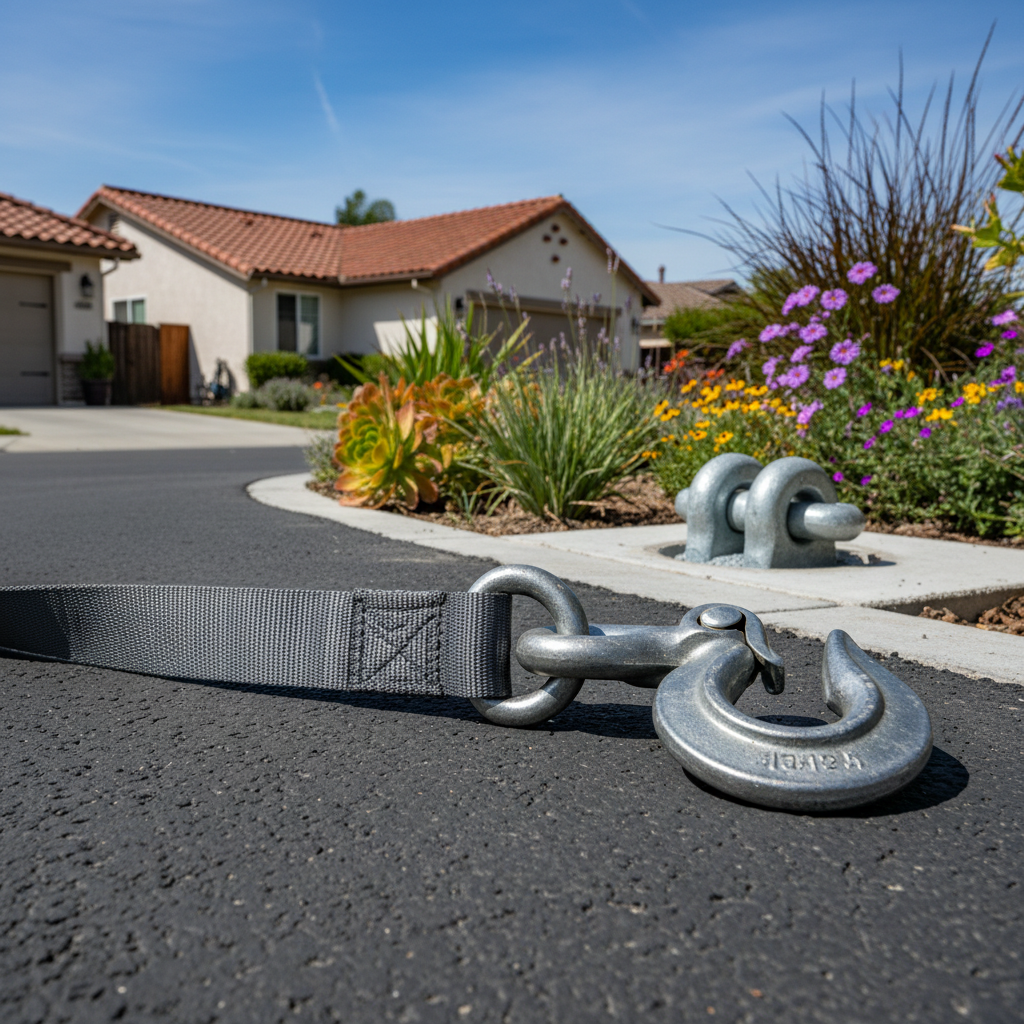
Alright, let's talk heavy-duty towing. Most folks think of big semi-trucks when they hear that phrase, but for homeowners, it's often about something else entirely. Maybe you've got a classic car project that's been sitting in the backyard, a small tractor for your acreage out in Bonsall, or even a large shed that needs relocating. Whatever it is, if it's too big or too heavy for a standard tow truck or a flatbed, you're looking at heavy-duty. And believe me, homeowners in Vista have some specific questions about this stuff. Here are the ones I hear most often, and my honest answers.
What exactly qualifies as 'heavy-duty' for a homeowner?
Good question, because it's not always obvious. For us, heavy-duty usually means anything too big or too heavy for a standard flatbed tow truck. Think about things like RVs, fifth-wheel trailers, large boats (especially if they're on a trailer that's seen better days), construction equipment like skid steers or mini excavators, or even a big, non-running truck. If it's over, say, 10,000 to 15,000 pounds, or it's got an awkward shape that won't fit safely on a regular flatbed, that's when we start talking heavy-duty. It's really about the specialized equipment required – bigger trucks, stronger winches, and different tie-down methods.
Can you move my non-running classic car or project vehicle?
Absolutely, we do this all the time. Plenty of folks in Vista have old muscle cars or project trucks tucked away in their garages or even out in the side yard. If it doesn't run, or it's been sitting so long the tires are flat and the brakes are seized, that's where heavy-duty comes in. We've got the right equipment to carefully winch it onto a specialized flatbed or use a wheel lift that can handle the weight and potential issues like locked wheels. The key is to tell us upfront about its condition – if the wheels don't turn, if it's got no suspension, or if it's partially disassembled, that changes how we approach the job. The more details you give us, the smoother the move will be, trust me.
What if my RV or trailer is stuck in a tight spot in my backyard?
This is a common one, especially with some of the older, more established properties around Vista with mature landscaping or narrow side yards. Getting a big RV or a utility trailer out of a tight spot often requires more than just pulling it straight out. We use specialized recovery techniques, sometimes involving multiple winches or even a rotator if it's really wedged in there. We'll assess the situation on-site, looking at clearance, ground conditions (especially after a good rain, when that clay soil can get really soft), and any obstacles like trees or fences. Our goal is always to get it out safely without damaging your property or the vehicle itself. It might take a bit more time and planning, but it's definitely doable.
Do I need to do anything to prepare my vehicle or item for heavy-duty towing?
Yes, a few things can really help. First, clear the path. If it's in your backyard, make sure there's a clear route for our truck to get as close as possible. Remove any obstacles like garden hoses, tools, or anything that could get in the way. If it's a vehicle, make sure it's unlocked so we can access the steering wheel and put it in neutral if possible. If there are any loose parts or personal items inside, secure them or remove them. For trailers, make sure the hitch is accessible and any stabilizing jacks are retracted. Basically, anything that can be secured or removed to prevent damage during transport is a good idea. We'll handle the heavy lifting and securing, but a little prep from your end goes a long way.
How much does heavy-duty towing cost compared to regular towing?
Honestly, it's going to be more. Heavy-duty towing requires bigger, more expensive equipment, more specialized training for our operators, and often takes more time to complete safely. The cost depends on several factors: the size and weight of the item, how far it needs to go, how accessible it is (e.g., stuck in mud vs. on a driveway), and any special recovery equipment needed. We usually charge an hourly rate for heavy-duty jobs, sometimes with a minimum call-out fee. The best way to get an accurate quote is to call us, describe exactly what you need moved, its condition, and where it's located. We'll give you a straightforward estimate, no surprises.
Can you move something that isn't a vehicle, like a large shed or a piece of machinery?
Definitely. While most of our calls are for vehicles, heavy-duty towing equipment is basically designed to move heavy, awkward stuff. We've helped homeowners move large storage sheds, industrial-sized generators, even large landscaping rocks or sculptures. The challenge often isn't just the weight, but how to safely lift and secure it without damaging the item. We'll need to know the dimensions and estimated weight, and whether it has any built-in lifting points. Sometimes, it requires a bit of creative rigging, but that's what we're good at. If you've got something big and stationary that needs to go from point A to point B on your property or to another location, give Vista Tow Truck a call. We'll figure out the best way to get it done.
What if my heavy item is on uneven ground or a steep incline?
Uneven ground or inclines add another layer of complexity, but it's something we're equipped to handle. Vista, with its rolling hills and varied terrain, means we encounter this pretty often. If your RV is parked on a sloped driveway, or your tractor is stuck on a soft patch in your back forty, we'll use specialized techniques to stabilize our truck and the item being moved. This might involve using outriggers, chocking wheels, or employing a more controlled winching process. Safety is our absolute top priority in these situations. We'll do a thorough on-site assessment to determine the safest and most effective method to recover and transport your heavy item, ensuring everything stays stable and secure throughout the process.